Article
How to Make the Ideal Small Business Website: A Guide to Success
There are 5.7 million businesses in the UK — yet one in four still doesn’t have a website, and many that do are outdated, slow, or invisible online.

LAST UPDATED:July 17, 2026
If you're a small business owner wondering whether your website is pulling its weight, or if you're starting from scratch and want to get it right first time, this guide covers everything you need to know. Planning, design, content, SEO, costs, and how to choose the right partner to build it with.
We’ve been building WordPress websites for small businesses for over 20 years. Here’s what we’ve learned about what separates a website that works from one that just exists.
Why Your Small Business Needs a Website in 2026
You’d think this would go without saying, but 26% of small businesses without a website still believe it isn’t relevant to their industry. Meanwhile, over 75% of consumers use Google before visiting a local business, and 42% go straight to the business website from search results.
Your website isn’t a digital brochure. It’s your most reliable salesperson, working 24 hours a day, 7 days a week. It builds trust before someone picks up the phone, it helps Google understand what you do and where you do it, and it converts visitors into enquiries.
Social media has its place, but it’s rented land. Algorithms change, reach drops, and you’re competing for attention with everything else in someone’s feed. Your website is the one place online where you control the message entirely.
Planning Your Small Business Website
Before you think about design, colours, or which platform to use, you need to answer three fundamental questions.
Should You Consider a One-Page Website?
One-page sites are quick to launch, cheap to maintain, and give visitors a focused, scroll-friendly journey, which works well on mobile. For a single service aimed at a single audience, they convert nicely.
The catch is SEO. Google ranks pages, not websites, so one URL means one keyword theme. A plumber offering boiler repairs, bathroom fitting, and emergency call-outs across three towns needs separate pages to rank for each. For local service businesses that rely on search, a one-pager usually means being invisible.
The short version: one-page sites are built for conversion; multi-page sites are built for discovery and conversion. If your enquiries come from referrals or ads, a one-pager can work. If you need Google to find you, go multi-page.
1. What is your website’s job?
Every page on your site should serve a purpose. For most local service businesses, the primary job is simple: generate enquiries. That means every design decision, every piece of content, and every button should move a visitor closer to getting in touch.
Define this clearly before anything else. A website built without a clear objective will look fine but deliver nothing.
2. Who are you trying to reach?
Understanding your target audience shapes everything, from the language you use to the images you choose. A plumber in Leeds needs a different approach from an accountant in Bristol or a restaurant in Manchester.
Think about what your ideal customer searches for, what questions they ask, and what would convince them to choose you over a competitor. Your website needs to answer those questions clearly and quickly.
3. What’s your budget?
Be realistic here. The cost spectrum for small business websites in the UK looks like this:
| Approach | Typical Cost | What You Get |
| DIY builder (Wix, Squarespace) | £9–£50/month | Template-based, self-service, limited SEO |
| Freelancer | £500–£3,000 | Variable quality, usually no ongoing support |
| Professional template (agency) | £3,000–£5,000 | WordPress, SEO foundations, brand-matched, supported |
| Fully bespoke agency build | £8,000–£15,000+ | Custom everything, strategy-led, ongoing partnership |
The hidden costs most people miss are hosting and maintenance (£100–£300/month), content creation, and SEO. A beautiful website that nobody can find is an expensive business card.
Our approach: We built our Small Business Website Template to sit in that professional-but-accessible space. For £4,876 you get a full WordPress setup including transfer of up to 30 pages, matched to your brand identity, logos, and fonts, plus two months of hands-on SEO support. That includes Rank Math Business fully configured, a backlink audit, Google Business Profile and Search Console audit, a 360 digital marketing strategy, and monthly progress reports.
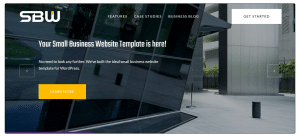
It’s designed for local service businesses who want agency quality without agency pricing. See what’s included →
Designing Your Small Business Website
With your plan in place, it’s time to think about design. Here are the principles that matter most.
Mobile-first, always
Over 60% of UK web traffic comes from mobile devices. If your website doesn’t work brilliantly on a phone, you’re losing more than half your potential customers before they’ve read a word. This isn’t optional. Every design decision should start with how it looks and functions on a small screen.
Navigation that makes sense
Your visitors should be able to find what they need within two clicks. Clear labels, a logical menu structure, and an obvious path from “I’m interested” to “I’m getting in touch.” Complicated navigation kills conversions.
Strong calls to action
Every page needs a clear next step. “Call us”, “Get a quote”, “Book a consultation.” Don’t make people hunt for how to contact you. Your phone number should be visible on every page, and click-to-call on mobile is essential for service businesses.
Brand consistency
Your website should look and feel like your business. Consistent use of your colours, typography, and logo builds recognition and trust. A professional, cohesive design signals reliability, something that matters enormously when a potential customer is deciding between you and a competitor.
Speed matters
Google uses page speed as a ranking factor, and visitors abandon sites that take longer than three seconds to load. Properly optimised images, clean code, and decent hosting make the difference. Cheap hosting is false economy.
Content That Works for Small Businesses

The design gets people in the door. The content is what makes them stay and take action.
Your homepage has three seconds
That’s roughly how long you have to communicate what you do, who you do it for, and why someone should choose you. Lead with the benefit to the customer, not a description of your business. “We help homeowners in Surrey get their plumbing sorted fast” beats “We are a family-run plumbing company established in 2005.”
Service pages need to sell, not just describe
Detailed descriptions of what you offer are necessary, but they’re not sufficient. Every service page should answer three questions: What do you do? Why does it matter to the customer? What should they do next? Weave in your unique selling points and make the call to action unmissable.
Blogging builds authority (and rankings)
You don’t need to become a full-time blogger. Even one well-written piece per month can make a meaningful difference to your search visibility. Focus on answering the questions your customers actually ask: “How much does it cost to…?”, “How long does it take to…?”, “Do I need planning permission for…?”
Every one of those questions is being typed into Google. If your website answers them, you’ll appear in the results.
Case studies are your secret weapon
Show your work. Before-and-after examples, the challenge you solved, and the result you achieved. Case studies build trust faster than any marketing copy and give Google rich, unique content to index.
Real example: We used our Small Business Website Template for Giant Storage and combined it with local SEO and keyword analysis.

The results speak for themselves. See how it’s working →
SEO: Making Sure People Actually Find You
A website without SEO is a shop with no sign above the door. Here’s what matters for small businesses.
Local SEO is your biggest opportunity
When someone searches “plumber near me” or “storage company in [town],” Google shows a map with three businesses, the Local Pack, and then the organic results below. Getting into that Local Pack can transform your enquiry rate overnight.
The key factors: a fully optimised Google Business Profile, consistent Name/Address/Phone number across the web, location-specific content on your website, and proper schema markup, structured data that tells Google exactly what your business is and where it operates.
Rank Math: the SEO tool we recommend
We’re strong advocates of Rank Math, a WordPress SEO plugin that makes managing your search visibility genuinely manageable. It provides real-time SEO analysis as you create content, handles schema markup without you touching code, integrates with Google Search Console, and tracks your keyword rankings over time.
For small businesses on WordPress, it transforms SEO from a mysterious dark art into a practical, step-by-step process.
On-page SEO essentials
Every page on your site needs a unique title tag that includes your service and location. Your meta descriptions should compel someone to click. Your images need descriptive alt text. And your site needs internal links connecting related content together.
These aren’t advanced techniques. They’re the basics, and getting them right puts you ahead of the majority of small business websites.
What we include: Every site we build on our Small Business Website Template comes with Rank Math Business fully configured, plus a backlink audit, Google Business Profile audit, Search Console audit, and a complete 360 digital marketing strategy. Two months of hands-on SEO support with monthly progress reports, because we don’t just build it and wish you luck.

Choosing the Right Platform
WordPress: our recommendation for small businesses
WordPress powers approximately 43% of all websites on the internet and holds over 61% of the CMS market. You own your content, you can move it anywhere, and the ecosystem of plugins and tools, like Rank Math, gives you a level of control that no other platform matches.
It does require hosting and maintenance, which is why working with a professional partner matters. But for any business that takes its online presence seriously, WordPress is the clear winner.
What about Wix and Squarespace?
They’re fine for personal projects or testing an idea quickly. But the SEO control is significantly more limited, you don’t truly own your site, and if you ever want to move platform, migration is difficult or impossible. For a business that depends on being found locally, the limitations become costly.
E-commerce considerations

If you’re selling products online, WooCommerce, which runs on WordPress, or Shopify are both strong options. WooCommerce gives you more flexibility and keeps everything under one roof. Shopify is simpler to set up but comes with transaction fees and less SEO control.
Security, Maintenance, and the Long Game
Your website needs ongoing care
WordPress sites need regular updates: core software, plugins, themes, and security patches. An unmaintained site is a security risk and will gradually lose rankings as Google favours actively managed sites.
Budget for this. Whether you handle it yourself or work with a partner, factor in £100–£300 per month for hosting, maintenance, security monitoring, and backups.
SSL is non-negotiable
The padlock in the browser bar, HTTPS, is required. Without it, browsers warn visitors your site isn’t secure, and Google penalises your rankings. Any professional web partner will set this up as standard.
Marketing Your Small Business Website
Launching is step one. Driving traffic is step two.
Google Business Profile
If you do nothing else, claim and fully optimise your Google Business Profile. It’s free, it directly influences your visibility in the Local Pack, and it’s often the first thing potential customers see. Complete every field, respond to every review, and post updates regularly.
Social media, but don’t overdo it
Pick one or two platforms where your audience actually spends time. For most local service businesses, that’s Facebook and Instagram. Share useful content, your latest projects, and customer stories. But remember, social media drives people to your website. Your website is where the conversion happens.
Email marketing
Build an email list from day one. Even a simple monthly newsletter keeps you front of mind with past customers and prospects. Personalised, valuable emails drive repeat business and referrals more reliably than almost any other channel.
Paid advertising, when it makes sense
Google Ads on high-intent local searches can generate leads quickly while your organic rankings build. Start small, £300–£500 per month, measure ruthlessly, and scale what works.
Measuring What Matters
Set up analytics from day one
Google Analytics and Google Search Console are free and essential. They tell you where your traffic comes from, what people do on your site, and where they drop off. Without this data, you’re guessing.
The metrics that matter for small businesses
Forget vanity metrics like total page views. Focus on enquiry volume, are people contacting you, conversion rate, what percentage of visitors take action, keyword rankings, are you moving up for your target searches, and bounce rate, are people leaving immediately.
Conversion rate optimisation
Small changes can make a big difference. Test different headlines, button colours, form lengths, and page layouts. A/B testing doesn’t require expensive tools. Even simple before-and-after comparisons of your enquiry rate after making changes will tell you what’s working.
For a deeper dive into everything covered here, read our Complete Guide to Small Business Websites in the UK.
Ready to Get Started?
If you’re a local service business and you want a website that actually generates enquiries, here are your options:
Do it yourself: Use the guidance in this article and our Complete Guide to brief a freelancer or build on WordPress yourself.
Work with us: Our Small Business Website Template gives you everything you need for £4,876:
- Full WordPress setup with transfer of up to 30 pages
- Template matched to your brand identity, logos, and fonts
- Rank Math Business plan, fully configured
- Backlink audit
- Google Business Profile and Search Console audit
- 360 digital marketing strategy
- Monthly progress reports
- Two months of hands-on SEO support
We’ve already seen strong results with clients like Giant Storage, where the combination of our template and local SEO support has delivered measurable improvements in visibility and enquiries.
See the template in action → or get in touch to discuss your project.
Small Business Website: FAQ

It depends on the approach. DIY builders start at £9–£50 per month but come with limited SEO control. Freelancer builds typically cost £500–£3,000 with variable quality. A professional agency template like ours costs £4,876 including WordPress setup, brand matching, and two months of SEO support. Fully bespoke agency builds start from £8,000 upwards.
WordPress. It powers 43% of all websites globally, gives you full ownership of your content, and combined with Rank Math provides the best SEO control available. We use WordPress exclusively for our small business websites.
It’s strongly recommended. Regular, useful content improves your search rankings, demonstrates expertise, and gives you material to share on social media. Even one post per month makes a meaningful difference.
Essential. Over 60% of UK web traffic comes from mobile devices. If your site doesn’t work brilliantly on a phone, you’re losing the majority of your potential customers.
For £4,876 you get a full WordPress setup (including transfer of up to 30 pages), matched to your brand identity, logos, and fonts, plus two months of SEO support: Rank Math Business fully configured, backlink audit, Google Business Profile and Search Console audit, a 360 digital marketing strategy, and monthly progress reports. See full details →
Using our template, a typical build takes 2–4 weeks from initial brief to launch. Bespoke builds take longer, usually 6–12 weeks depending on complexity.
With our template package, you get two months of hands-on SEO support after launch, including progress reports so you can see what’s working. After that, we offer ongoing support and marketing packages, or you can manage the site yourself.
Yes. Take a look at Giant Storage to see our template in action, or visit smallbusinesswebsite.design for a full overview of what’s included.
A good agency brings expertise in design, SEO, and conversion optimisation that most business owners simply don’t have time to develop themselves. We’ll audit your current site, identify what’s holding it back, and either rebuild on our template or recommend a bespoke approach, depending on your needs. Talk to us →
Need a new small business website?
If you’re looking to partner with a digital agency to help design & build your new small business website, drop us a line. We’re always happy to discuss new projects and find the best solution that fits your needs.



Small Business Websites: Further Reading
We hope that you found this article about small business websites useful. If so, you may find this equally helpful.